
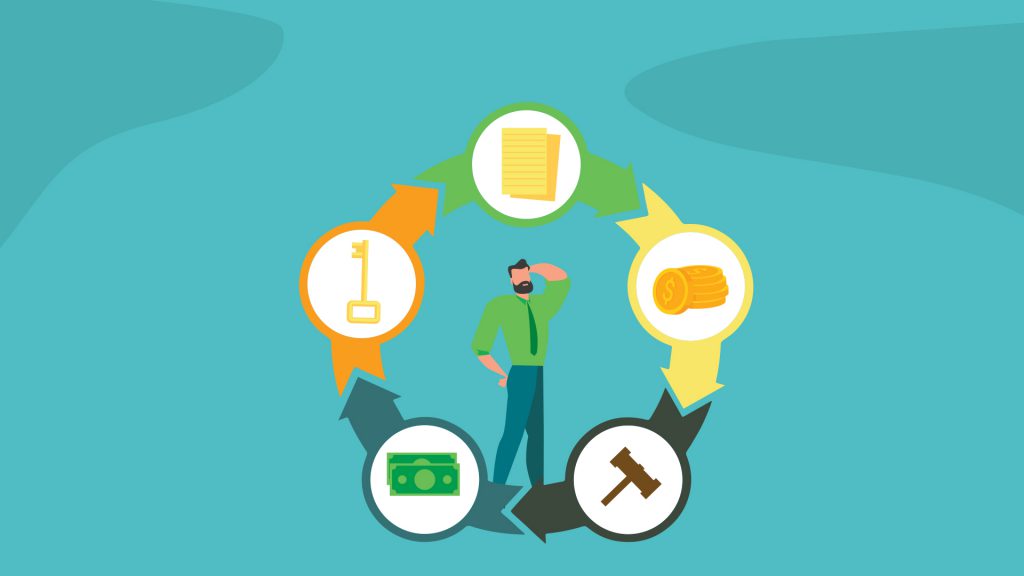
Every time a lender makes a loan to a borrower, they’re taking a big risk. How can a lender know if the borrower will make on-time payments? How will the lender know the borrower won’t default on the loan? They honestly don’t know, which is why lending is a risk. But through experience, lenders have discovered ways to help them predict the chances of default.
What the lenders do is look at particular data and characteristics related to a borrower to assess the level of risk in making a loan to that borrower. As lenders refine this risk-assessment process, they often also create loan guidelines borrowers can use to see if they’re even eligible. This helps save time by preventing people from applying for a loan who would most likely be rejected anyways. For that to work, however, consumers need to understand the financial terms used in loan guidelines. This article will help you understand the common financial terms you’ll find in bankruptcy auto loan guidelines so you can decide whether or not this type of a loan is right for you.
How Credit Reports and Credit Scores Affect Loan Guidelines

Some lenders have a very clear guideline for a minimum credit score potential borrowers have to meet in order to be eligible to apply for a loan. It’s going to vary widely from lender to lender depending on the level of risk they are willing to take on in making a loan. The higher the credit score requirement, the less risk they are willing to expose themselves to, making it harder or impossible for folks with challenged credit to get a loan through that lender.
At Day One Credit, we don’t have a minimum credit score requirement. In fact, you might qualify even if you have no credit history at all! Because we specialize in finding bankruptcy car loans, we know your credit score is already not good. But because you’re in bankruptcy or recently had one discharged, we also know you’re on the pathway to restoring your credit and doing better. The lenders we work with are the ones who also look past a credit score to serve this group of customers and help them make the most of the fresh start bankruptcy provides.
Payment to Income and Debt to Income ratios: PTI and DTI

Many lenders want to take a close look not just at your income, but how much of your monthly gross income (before taxes are taken out) is going to go towards the loan payment. This is a way of making sure you don’t end up with a loan payment you really can’t afford. Lenders refer to this ratio as PTI – your payment to income ratio. But they don’t just take into account the monthly car loan payment. They’re also going to add in your monthly car insurance payment because you need to be able to afford both.
You can figure out your own PTI ratio by taking what you think you can afford in terms of a car loan payment plus an estimate of the monthly car insurance payment, add them together, and then divide that total by your monthly gross income and express the result as a percentage. A lot of lenders who work with people who have challenged credit generally want your PTI ratio to be in the 15-20% range. As an example, let’s say you’re interested in buying a used car but you need to finance it. You have an idea of what you want and think a reasonable monthly car loan payment for you would be $250/month and insurance of about $90/month for a grand total monthly car-related payment of $340. Now let’s say your gross monthly income is $2,400. You take the payment of $340 and divide it by your income of $2,400 and get .14 (rounding down), then move the decimal point over two places to the right and get 14%. This would be an acceptable PTI ration for many lenders. That is, unless you have a lot of other debt payments to make. This is why most lenders will also look at your DTI ratio – your debt-to-income ratio.
Your DTI gives lenders a picture of how much of your gross monthly income has to go to all your debt and bill payments combined together. If most of your monthly income is eaten up with your bills, lenders will question how you can add another significant bill in the form of a car loan payment and insurance. Calculating your DTI is similar to calculating your PTI. The difference is that in the case of DTI what you’re adding together are all your regular monthly bills and debt payments for housing, utilities, and so on. Many lenders get very nervous about making a loan to you if your DTI is more than 50%.
Here at Day One Credit, the advantage you have is the fact that you’ve either declared bankruptcy or have recently had your bankruptcy discharged. This is when your debt-to-income ratio is going to be much better than it was before you declared bankruptcy, and the lenders we work with understand how much this matters.
Day One Credit Bankruptcy Financing Guidelines

At Day One Credit, we take great pride in helping people who have declared bankruptcy get the car they need by finding bankruptcy car loans for them. The lenders we work with specialize in this type of lending, and we get them all competing with each other to get your business. This helps you find the loan that best fits your credit situation. We find we can help most people in a bankruptcy situation, but not everyone. We do have our own eligibility guidelines to help you determine whether or not you should apply. Please note, however, that meeting our eligibility guidelines does not guarantee you’ll get a loan. We still have to evaluate your application to make sure we can work with you. If you meet the guidelines below, you should feel free to apply:
Income: We need documented proof of minimum gross monthly income of at least $2,200 per month. You can prove your income with W-2 forms from your employer or with 1099 forms or bank statements if you are self-employed.
Bankruptcy Status: Because we work exclusively with bankruptcy customers, you need to have either already filed for bankruptcy or have had your bankruptcy recently discharged.
Valid Driver’s License: Unfortunately, if your driver’s license is expired or suspended, we cannot help you.
Those are our three most basic eligibility guidelines. But we also find there other cases where we think a bankruptcy car loan is not a good choice for you, including the following:
You Already Have a Great Car: If your current vehicle is still on the new side with low miles, is paid off or close to being paid off, you should just stick with it.
Income is Not Stable: In order for a bankruptcy car loan to work in your favor, your income needs to be stable. If you know your income is about to drop or you’re going to experience a sudden increase in expenses, it would be better not to apply.
Cosigner Bankruptcy Status: Sometimes our bankruptcy customers want to use a cosigner to boost their chances of getting a loan. But if your cosigner didn’t also file for bankruptcy and things go badly with payments, the lender can go after the cosigner.
Our commitment to you at Day One Credit is to help you understand the details of your own credit situation and give you a realistic picture of what’s possible. We aren’t going to let you take on a loan payment you can’t afford because that is simply not helpful.
The other piece of good news about working with Day One Credit to find a bankruptcy car loan is it’s one way to start rebuilding your credit after bankruptcy. This pathway to restoring your credit means finding a new loan and making on-time payments. Some lenders won’t give you the time of day with a bankruptcy on your credit history, but it’s our whole mission to work with bankruptcy customers!
There are lending programs in our network that don’t require any down payment, and we will also help you find an affordable used car that’s right for you. If you meet our basic bankruptcy car loan guidelines, you can start the process online at our website when you fill out our easy online application. If we need to clarify any of the information on your application, we’ll contact you. And then you’ll hear back from us in a matter of minutes! But if you have more questions about how all this works, please feel free to contact us – we’ll be happy to talk you and help you understand everything you need to know!
At Day One Credit we are experts at finding the best possible bankruptcy car loans in order to help our customers purchase high-quality used cars. We are not lawyers, we do not give legal advice, and nothing we say should be taken as legal advice. Your first step in anything related to bankruptcy should always be seeking the advice and counsel of a qualified bankruptcy attorney.























Купить дипломы о высшем. Получение высшего образования – это важный этап в жизни каждого человека. Однако не всегда все идет гладко и по плану. Иногда возникают ситуации, когда получить диплом об образовании становится трудной задачей. Например, из-за финансовых проблем, семейных обстоятельств или других причин. В таких случаях люди могут обратиться к услугам по покупке дипломов о высшем образовании. Покупка диплома купить дипломы о высшем о высшем образовании – это способ решения проблемы быстро и эффективно. При этом необходимо учитывать, что важно выбирать надежных поставщиков таких услуг, чтобы избежать возможных негативных последствий. Когда человек решает купить диплом о высшем образовании, он должен быть уверен в том, что документ будет выглядеть абсолютно реалистично и не вызовет подозрений у потенциальных работодателей или других заинтересованных лиц. При выборе поставщика услуг по покупке дипломов читать далее о высшем образовании следует обращать внимание на репутацию компании, её опыт работы на рынке, а также отзывы клиентов. Важно, чтобы документ был изготовлен на высоком уровне профессионализма и соответствовал всем стандартам и требованиям. Только в этом смотреть тут случае можно быть уверенным в том, что покупка диплома не вызовет проблем в будущем. Купить диплом о высшем образовании можно как в режиме онлайн, так и офлайн. Онлайн-покупка диплома предполагает общение с менеджером компании через интернет, отправку необходимых документов и оплату услуги. Далее специалисты начинают работу над изготовлением документа, который будет выслан клиенту по почте или курьерской службой. Офлайн-покупка диплома о высшем образовании предполагает личное общение с представителями компании, возможность посмотреть образцы документов и обсудить все детали заказа. После заключения договора специалисты начинают работу над изготовлением диплома, который будет передан клиенту в удобное для него время и место. Важно помнить, что покупка диплома о высшем образовании не является панацеей для всех проблем. Этот способ может быть полезен в определенных ситуациях, но не следует злоупотреблять им. Важно помнить, что диплом – это не просто кусок бумаги, а документ, который подтверждает квалификацию и знания человека. Поэтому при покупке диплома стоит быть готовым к тому, что в будущем могут возникнуть вопросы или проблемы, связанные с его происхождением. В заключение можно сказать, что покупка диплома о высшем образовании – это решение, которое должно быть принято осознанно и ответственно. Важно выбирать надежных поставщиков услуг и быть готовым к возможным последствиям. В идеале, конечно, лучше получить образование легальным путем, но если это не представляется возможным, можно воспользоваться услугами по покупке дипломов о высшем образовании.